- Vocab (Academic and Content) (p.140)
- Taking Notes (p.140): Chart
- Comparing (p.142): Describe two similarities between the reigns of Frederick II of Prussia and Catherine the Great of Russia.
- Geography Connection (p.143): #1 & 2
- Reading Progress Check (p.144): Explain the involvement of Great Britain and France in the Seven Year's War.
- Lesson 3 Review (p.144): #1 & 3
Sunday, October 1, 2017
8.3: Enlightened Absolutism and the Balance of Power

8.2: The Ideas of the Enlightenment

- Content Vocabulary
- Reading Progress Check (p.136): What are two ways in which philosophes sought to change the world?
- Guiding Question (p.136): How did the belief in logic and reason promote the beginnings of the social sciences?
- Reading Progress Check (p.136): What roles did Adam Smith believe the government should fulfill in society?
- Critical Thinking (p.136): How did both printing and the Encyclopedia contribute to the promotion of Enlightenment ideas?
- Critical Thinking (p.138): Do the coffeehouses of today serve the same purpose as early ones? Why or why not?
- Reading Progress Check (p.138): How did Mary Wollstonecraft use the Enlightenment ideal of reason to advocate rights for women?
- Reading Progress Check (p.139): How do Haydn's interests as a composer reflect the influence of Enlightenment Ideas?
- Lesson 2: Review: #1, 3, 7
- We will also discuss some Current Events occasionally and may be asked to locate them on a map.
- We will explore a map of Africa and the Middle East and wrote down some major names to watch.
Monday, September 25, 2017
Magna Carta, The Declaration of Independence
Standards Addressed Today:
- W.1 Compare the major ideas of philosophers and their effects on the democratic revolutions in England, the United States, France, and Latin America including John Locke, Charles-Louis Montesquieu, Jean-Jacques Rousseau, Simón Bolívar, Toussaint L’Ouverture, and Thomas Jefferson. (C, H, P)
- W.2 Analyze the principles of the Magna Carta (1215), the English Bill of Rights (1689), the American Declaration of Independence (1776), and the French Declaration of the Rights of Man and the Citizen (1789) citing textual evidence. (H, P)
What is Magna Carta?
The Story of Magna Carta:
Thursday, August 31, 2017
Chapter 1.1: Ancient Civilizations
Begin reading in Section 1 on page 4 of the World History textbook
Ancient Civilizations
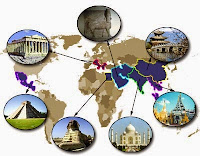

- The First Humans
- The First Civilizations: The Peoples of Western Asia and Egypt
- The First Civilizations: Ancient India
- The First Civilizations: Ancient China
- The Civilization of the Greeks
- The World of the Romans
- Add the bold vocabulary words to your page.
- Create the table from the margin on page 4 to identify the 6 characteristics of a civilization.
- Answer questions 5-8 on page 10.
- Answer question 9 in a full paragraph.
- Compare and Contrast the textbook with the series we have been watching.
On the back of your paper:
- Discuss your thoughts on the "beauty" / makeup / physical prejudice videos we have watched and talked about. What did you agree with? What did you disagree with? Was it a valid use of classroom time?
Place completed assignments in the top basket and I will pick them up this weekend.
Thursday, August 17, 2017
Cornell Note Taking and Primary vs. Secondary Sources
Cornell Notes: You can use a pre-made form or a piece of regular ruled binder paper to create a Cornell Note form.


There are some good tips in this one -- and some things NOT to do. :)
Primary vs. Secondary Sources
Another good discussion on this issue is a teacher who was looking to teach The Gettysburgh Address. As a history teacher, he knew the importance of going to a primary source -- but what he discovered was that sometimes, that is not always easy.
Discuss: What are some other potential problems with primary sources?
- Begin with a heading (Name, date, class, etc.)
- Add a title:
- If it's a lecture, something like "The Pullman Strike" or "The Water Cycle".
- If it's a chapter [or section of a chapter] use the title of that section.
- If it's a movie, use the title of the movie.
- In the "Notes" section, you will take shortened, essential notes.
- Don't write down EVERYTHING -- keep it simple and cover main points.
- When the lecture/film/section is over, summarize the page in the bottom section.
- Just quickly tell what the page is about as if you had to explain it to someone in a sentence or two.
- Finally, add some study questions in the left column to help you remember the material.
- See examples below:
A bit more about note taking:
Taking Cornell Notes (For Nursing School):
Primary vs. Secondary Sources
- Take some notes about what primary and secondary sources are. List some examples.
Another good discussion on this issue is a teacher who was looking to teach The Gettysburgh Address. As a history teacher, he knew the importance of going to a primary source -- but what he discovered was that sometimes, that is not always easy.
Discuss: What are some other potential problems with primary sources?
- Perspective / Point of View
- Misunderstandings
- Misquotes
- Dishonesty
Wednesday, August 16, 2017
Journal Write: Future Archaeologists
When we look at the past, we do so through a lens of what we know or understand. Think about these objects. Do you know what they are or how they are used? If you had to use one, could you? If you had to make one, could you?


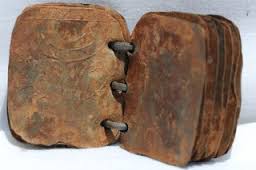


Journal Write: Future Archaeology
In a "Journal Write" you will label your paper with your name, block, and "Journal: ______" (this one would be "Journal: Future Archaeology"). You will write for approximately 5-10 minutes (depending on the prompt) and should come up with at least one solid paragraph.

(10 minutes)
Subscribe to:
Posts (Atom)